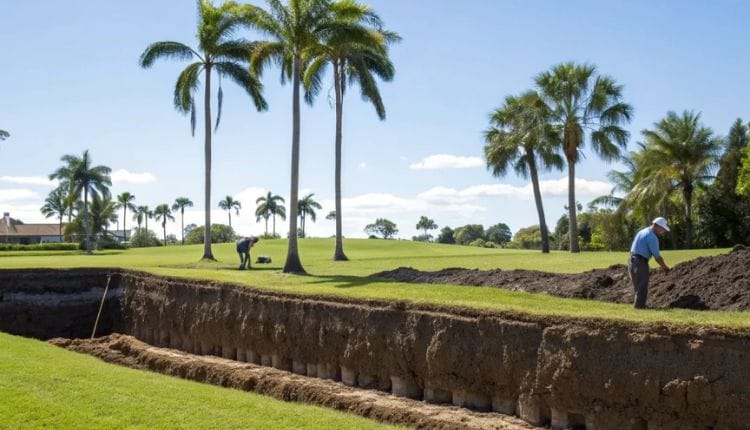

Septic systems don’t operate under identical conditions everywhere. The same tank, drain field, and maintenance schedule that works reliably in one region can perform completely differently in another, simply because soil composition, water table depth, and climate patterns vary so significantly across the country. Florida’s specific combination of these factors creates septic maintenance considerations that homeowners moving from other regions often don’t anticipate until they’ve already experienced a problem that a more region-aware approach might have prevented.
Sandy Soil Changes How Drain Fields Actually Function
Florida’s soil composition, heavily sandy in many regions, affects drain field performance in ways that differ meaningfully from the clay-heavy or loam soils common elsewhere in the country. Sandy soil generally drains faster than denser soil types, which can seem like an advantage for wastewater processing, but this rapid drainage also means less natural filtration occurs before wastewater reaches the water table, since filtration effectiveness depends partly on water moving slowly enough through soil for biological and mechanical filtering processes to actually work.
This drainage characteristic means Florida septic systems sometimes require different drain field sizing or design considerations than systems installed in slower-draining soil, precisely to compensate for the reduced natural filtration that fast-draining sandy soil provides. Homeowners relocating from regions with denser soil sometimes assume their previous experience with septic maintenance timing translates directly to Florida conditions, when the underlying soil mechanics actually call for a somewhat different approach specific to local ground conditions.
A High Water Table Creates Unique Seasonal Challenges
Much of Florida sits atop a notably high water table compared to many other regions, meaning groundwater exists much closer to the surface than in areas with deeper water tables. This proximity creates a specific challenge for septic systems: during periods of heavy rainfall or seasonal water table rise, the water table can approach or even reach the depth of a drain field, severely limiting the system’s ability to properly disperse and treat wastewater.
This seasonal water table fluctuation means Florida septic systems sometimes experience their greatest strain not during periods of heaviest household use, but during Florida’s rainy season, when elevated groundwater levels reduce a drain field’s normal treatment capacity regardless of how much wastewater a household is actually generating at that time. Homeowners who understand this seasonal pattern can better anticipate when their system might need extra attention, rather than being caught off guard by problems that correlate more with weather patterns than with any change in household water usage.
Hurricane Season Introduces Additional Considerations
Florida’s hurricane season introduces septic system stresses that most other regions simply never need to plan around. Heavy, sustained rainfall during a storm event can saturate soil far beyond normal seasonal wet conditions, temporarily overwhelming even a well-functioning system’s capacity to process wastewater effectively. Power outages accompanying severe storms can also disable pump-assisted septic systems that rely on electrical components to move wastewater to the drain field.
Homeowners in hurricane-prone areas benefit from understanding these storm-specific vulnerabilities well before hurricane season arrives, including reducing water usage during and immediately after major storm events to reduce strain on a system that may already be dealing with saturated surrounding soil from heavy rainfall.
Rapid Population Growth Has Strained Local Service Availability
Central Florida’s rapid population growth over recent decades has increased demand for septic maintenance and repair services considerably faster than in more slowly growing regions. This growth has created scheduling pressures for septic services during peak demand periods, particularly following major storm events when many systems across a region may need attention simultaneously, competing for the same limited pool of available service providers and equipment.
Homeowners seeking septic companies Orlando FL rely on these companies for regular maintenance and benefit from establishing a maintenance relationship during normal conditions rather than waiting until an emergency arises during a high-demand period, since routine scheduling flexibility tends to be considerably better outside of storm-related surge periods when service availability becomes more constrained across the entire region.
Regional Awareness Improves Long-Term System Performance
Homeowners who understand these region-specific factors, sandy soil drainage characteristics, seasonal water table fluctuation, and hurricane-related stresses, tend to make more informed maintenance decisions than those applying generic septic care assumptions borrowed from a different climate or geography entirely. This regional awareness doesn’t require deep technical expertise, just a basic understanding that Florida’s specific ground and weather conditions genuinely change how septic systems perform and what maintenance timing actually makes sense for local conditions, rather than assuming standard national guidance applies uniformly regardless of where a system is actually located.