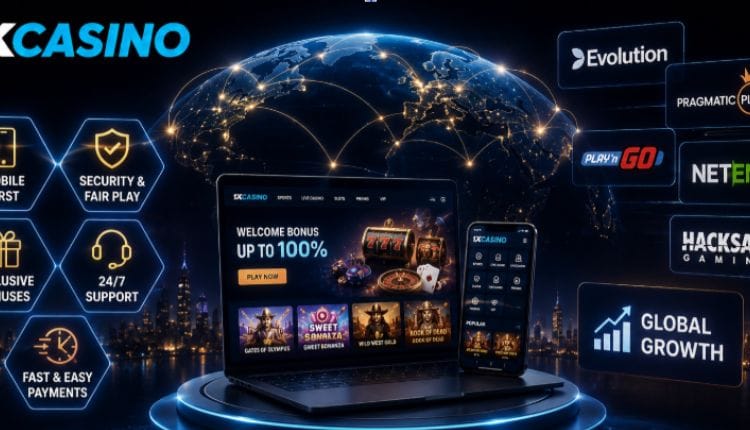
A decade ago, going global meant opening offices and chasing licenses country by country. Today it looks more like shipping software. Modern gaming companies behave less like traditional operators than like the streaming and app brands on a phone, and a platform such as 1xcasino online expands the way those products do: localization, mobile reach, an experience that travels. The question is not who is the biggest. It is what lets a brand cross borders at all.
What Defines a Global Gaming Brand Today?
The defining trait is rarely the logo. A global gaming brand today is really one technical backend wearing dozens of local faces. The shared plumbing, payments, account checks, and game library sit underneath, while each market gets its own language and homepage. A wide 1xcasino partners network sits on top as the distribution arm, since local affiliates reach places a central team cannot. Recognition, the shirt sponsorship or the half-remembered name, tends to arrive last. It is the lagging signal that the harder work of payments and distribution paid off.
The Shift From Regional Platforms to International Ecosystems
The reason dozens of brands scaled at once is unglamorous: the hard parts got outsourced. A platform no longer integrates 200 payment methods; it plugs into an orchestration layer and inherits local rails overnight. It does not license each studio either; an aggregator supplies thousands of titles in one connection.
Going international stopped being a five-year build and became an integration job. When the plumbing is something anyone can rent, building the platform is no longer the edge. Localizing and marketing it is. The brands that scaled fastest treated those rented parts as a starting line.
How 1xCasino Reflects Broader Industry Trends
1xCasino reads as a product of that integration era, not an exception to it. Its breadth of language versions is less a vanity feature than a map of its bets, since the languages it prioritizes reveal the markets it chases. Its lean on direct Android distribution points the same way: a brand built for app stores would not bother, but one growing where the Play Store is restricted or data costly would.
The content mix, slots beside live casino and crash games, signals a platform built to greet different regional tastes from one catalog. None of this is unique, and that is the point: it shows how a modern operator is assembled market by market, from the same parts its rivals use.
The Future of Global Gaming Competition
Look forward and the battleground narrows. When everyone rents the same games and payment middleware, the catalog stops differentiating, and the contest moves to what is hard to copy.
Payout speed is one: a platform settling a withdrawal in minutes through a local instant-transfer rail will pull users from one that takes three days. Real localization is another: adapting to a culture, not translating its words.
The brands likely to struggle are not those with fewer titles, but those that treated localization as a language pack and never solved moving money fast. The edge now is in the smallest details, not the broadest reach.
Global Success Depends on More Than Size
The biggest brand does not win this automatically. The winner is the one that feels local in fifty places while running on shared rails underneath. 1xCasino sits inside that shift, not above it, one of many learning that reach means little without local fit. Scale opens the door. Adaptation keeps you in the room.