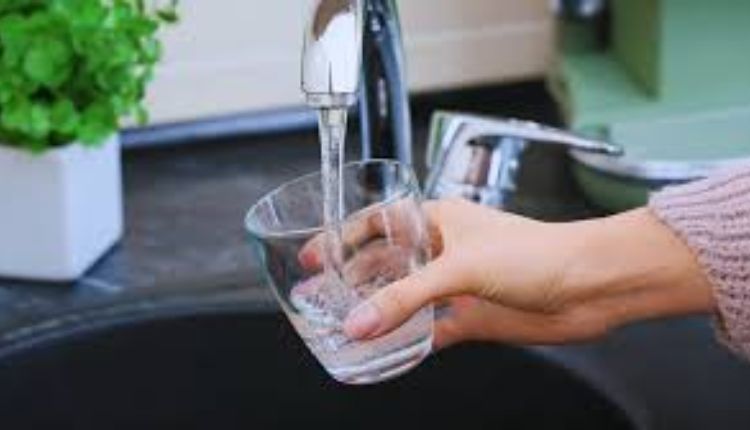

Mineral-rich water often seems harmless at first because it looks clean, runs normally, and does not always create immediate plumbing failure. Yet the dissolved calcium, magnesium, and other naturally occurring minerals in that water can slowly change how household fixtures perform and age. What begins as faint spotting on a faucet or a chalky ring around a drain can lead to reduced flow, stiff handles, uneven spray patterns, and premature wear of fixture components. The effect is gradual, which makes it easy to overlook. Over time, though, hard water turns routine plumbing use into a pattern of buildup, restriction, and repeated maintenance across the home.
Where the buildup starts
- Surface Deposits Change Fixture Appearance
One of the first ways mineral-rich water affects plumbing fixtures is by leaving visible residue on exposed surfaces. Faucets, showerheads, sink basins, and tub surrounds often develop a cloudy or crusted film as water evaporates, leaving minerals behind. This buildup does more than dull the finish. It can settle into aerators, cling to seams around handles, and collect around the base of fixtures where water regularly splashes and dries. In kitchens and bathrooms, that means the fixture may begin looking older long before it actually wears out structurally. The problem becomes more noticeable on dark finishes, polished metal, and glass surfaces, where every dried droplet leaves a trace. Homeowners often clean these spots repeatedly without realizing the marks are not caused by poor housekeeping but by the mineral content of the water itself. Over time, frequent scrubbing can also wear down protective finishes, which makes fixtures even more vulnerable to staining, pitting, and a rougher surface texture that holds future deposits more easily.
- Internal Passages Narrow Over Time
The deeper issue with mineral-rich water is not always what appears on the outside, but what begins happening inside the fixture. Water passing through aerators, cartridges, mixing valves, and spray nozzles can deposit scale in narrow internal passages, where even a small amount of buildup can change performance. A faucet that once delivered a smooth stream may begin to sputter or lose volume. A showerhead may develop an uneven spray pattern because some openings are partially blocked while others remain open. These changes are often blamed on fixture age alone, but mineral accumulation is frequently the hidden reason performance declines. In many homes where hard water is persistent, even high-quality fixtures can begin acting inconsistently because their internal pathways were never designed to operate with repeated scale formation. Homeowners seeking local plumbing help may come across resources such as https://www.trust1services.com/service-area/milton-ma/ when trying to understand why fixtures are failing sooner than expected in hard water conditions. The point is not only that mineral deposits exist, but that they gradually interfere with the precision parts inside fixtures that control flow, pressure, and temperature response every day.
- Moving Parts Become Less Responsive
Mineral-rich water also affects the mechanical feel of household plumbing fixtures. Handles that once turned smoothly can begin to stiffen, diverter valves may become harder to shift, and shutoff points may feel less precise as scale forms around moving parts and sealing surfaces. In single-handle faucets, mineral deposits can interfere with the cartridge’s movement, making the handle feel tight, jerky, or inconsistent when adjusting the temperature. In shower valves, buildup can reduce the accuracy with which hot and cold water blend, which may lead to temperature drift or a control that no longer feels predictable. Toilet fill valves and flappers can also suffer from scale-related wear, especially when mineral deposits settle on internal parts that are meant to move freely and seal cleanly. This type of deterioration matters because fixtures are used constantly, and even small reductions in responsiveness can become frustrating when they occur several times a day. The fixture may still operate, but not with the same ease or reliability. Over time, those performance changes often lead homeowners to replace parts more often, deal with drips that return after cleaning, or tolerate controls that never quite feel right again.
- Water Flow Problems Spread Across the Home
As mineral buildup continues, the effect often spreads beyond one fixture and starts shaping the overall experience of water use throughout the house. Multiple faucets may show reduced flow, shower performance may weaken, and appliances connected to plumbing lines may operate less efficiently because mineral buildup affects both visible fixtures and the smaller control components linked to them. This creates a pattern where the plumbing system feels older than it is. A homeowner may replace a showerhead, clean an aerator, or change a faucet cartridge, only to find the same problem reappearing elsewhere. That repetition is one of the clearest signs that mineral-rich water is influencing the home at a broader level. Fixtures do not fail in isolation when hard water is persistent. They experience a shared environment that encourages the formation of scale wherever water slows, sprays, mixes, or evaporates. The cost is not always dramatic in a single moment. Still, it grows through repeated cleaning, reduced efficiency, shorter fixture life, and the frustration of plumbing components that lose their original performance gradually rather than suddenly.
Hard Water Quietly Shortens Fixture Life
Mineral-rich water affects household plumbing fixtures by changing both their appearance and their function. Surface residue dulls finishes, internal scale narrows flow paths, moving parts lose responsiveness, and the entire home may begin to show recurring signs of reduced water performance. Because the damage builds slowly, it often feels normal until maintenance becomes constant or replacement starts happening sooner than expected. Hard water is not just a cosmetic annoyance. It creates conditions that cause fixtures to work harder and age faster. Recognizing that pattern is important because lasting fixture performance depends not only on the fixture itself, but also on the quality of the water moving through it every day.