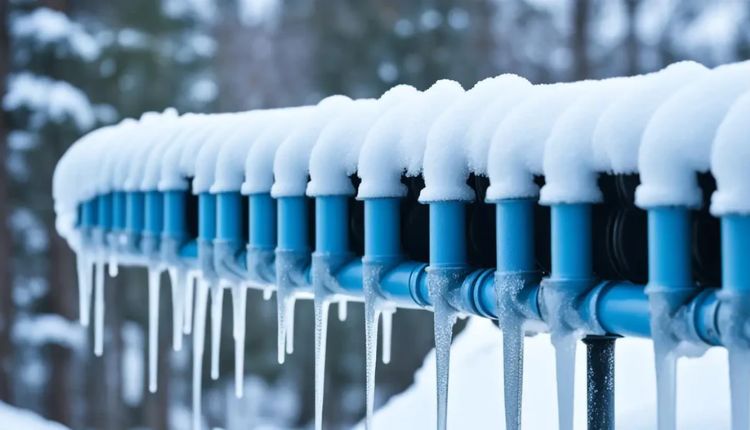

Frozen pipes rarely begin as dramatic emergencies. More often than not, the problem starts with a quiet temperature drop in an overlooked part of the house, such as a crawl space, exterior wall cavity, attic run, garage ceiling, or unheated basement corner. Water inside the pipe loses heat, flow slows, and pressure begins to build as freezing spreads through the line. By the time a homeowner notices reduced flow or a complete blockage, the system may already be under stress, which can lead to cracking or bursting as the ice expands further. That is why pipe insulation matters. It helps slow heat loss and gives vulnerable plumbing a better chance of staying above freezing.
Where protection matters most
- Insulation Works By Slowing Heat Loss
Pipe insulation reduces the risk of winter freezing by creating a barrier between the pipe surface and the surrounding cold air. It does not generate heat on its own. Still, it helps the water inside the pipe hold its temperature longer, which is critical during overnight cold snaps or extended periods of low outdoor temperatures. This strategy is especially important in areas where plumbing passes through spaces that were never meant to stay fully conditioned. Even a well-built home can have weak points where cold-air intrusion, poor sealing, or thin insulation around the structure exposes piping to temperature swings. Foam sleeves, fiberglass wraps, and other pipe-covering materials help reduce that exposure, but the real value comes from using them where the risk is highest rather than assuming all pipes face the same conditions. A pipe run along an interior conditioned wall does not face the same freeze risk as a supply line routed through a vented crawl space or tucked behind cabinets on an exterior wall. Effective insulation planning starts with identifying vulnerable paths and recognizing that heat loss is not uniform throughout the home. Once those colder zones are identified, insulation becomes a way to buy time, reduce exposure, and lower the risk that brief weather events lead to major plumbing failures.
- Material Choice And Installation Quality Matter
Not all insulation strategies perform the same way, because the material, fit, and installation method all influence how much protection the pipe actually receives. A loosely fitted foam tube with open seams will not slow heat loss as effectively as one that fully surrounds the pipe and is sealed carefully at joints, elbows, and transitions. The same is true for wrapped insulation that leaves gaps around valves, tees, or support points. These interruptions may look minor, but they can create cold spots where freezing begins first. Material selection also matters because different pipe locations call for different approaches. Some spaces need moisture-resistant coverings, while others benefit from thicker insulation where air temperatures drop more sharply. In homes where winter plumbing protection becomes part of broader seasonal maintenance, companies such as Tennessee’s Choice Plumbing may find that the success of insulation depends less on the act of insulating and more on whether the pipe was covered continuously and matched to the surrounding conditions. A short section left exposed near a foundation vent or sill plate can undermine a much larger insulated run. That is why insulation should be treated as a complete protective layer, not a patch applied only where the pipe is easiest to reach. Good coverage depends on continuity, proper fastening, and attention to the sections most likely to meet cold air first.
- Exposed Areas Need More Than Pipe Wrap Alone
Some plumbing routes are so vulnerable that insulation by itself may not be enough unless the surrounding area is addressed as well. Pipes in crawl spaces, attics, exterior chases, and garages are affected not only by the temperature of the pipe surface but by the overall environment around them. If cold air is moving freely through the space, even insulated lines can lose heat over time. That is why one of the most useful strategies is to combine pipe insulation with broader measures such as air sealing, draft reduction, and sealing structural gaps where winter air enters. Closing openings near foundation vents, sealing wall penetrations, improving insulation in rim joist areas, or reducing wind exposure around access panels can make pipe insulation far more effective because the surrounding air is no longer stripping heat away as quickly. This matters most during prolonged cold periods, when the pipe must resist freezing for many hours rather than just one cold night. Another factor is the pipe placement relative to the building’s insulation. In some homes, pipes are installed on the cold side of wall insulation rather than the warm side, leaving them far more exposed than the finished wall surface suggests. When that condition exists, insulating the pipe helps, but evaluating the wall cavity and nearby air movement becomes just as important. Freeze prevention works better when the pipe and its environment are treated together.
Slower Heat Loss Means Lower Freeze Risk
Pipe insulation helps reduce the risk of winter freezes by slowing the rate at which plumbing lines lose heat in vulnerable parts of the home. That slower heat loss can make the difference between a pipe staying safe through a cold night and a pipe freezing under pressure in an exposed cavity. The strategy works even better when material choice, installation continuity, and surrounding air conditions are considered together. Insulation is not a guarantee against every freeze, but it is one of the most practical ways to reduce plumbing exposure before winter problems begin. A well-protected pipe has more time, greater resilience, and a lower chance of causing costly cold-weather damage.