
A heating and cooling system can turn on, run through a full cycle, and still perform poorly where it matters most. Rooms stay uneven, utility costs creep upward, equipment seems to work harder than expected, and comfort never feels steady for long. In many of these cases, the problem is not immediately visible because it lies within the airflow pattern rather than in an obviously broken part.
That is why airflow diagnostics hold such an important role in HVAC performance. Heating and cooling equipment does not deliver comfort solely through temperature changes. It depends on moving the right amount of air through the system, across coils or heat exchangers, and into occupied spaces without excessive restriction or leakage. When airflow is weak, unbalanced, or poorly distributed, the system can lose efficiency, strain components, and leave the building feeling inconsistent even when the thermostat appears satisfied.
Why Performance Problems Often Go Unseen
- What Airflow Diagnostics Actually Measure
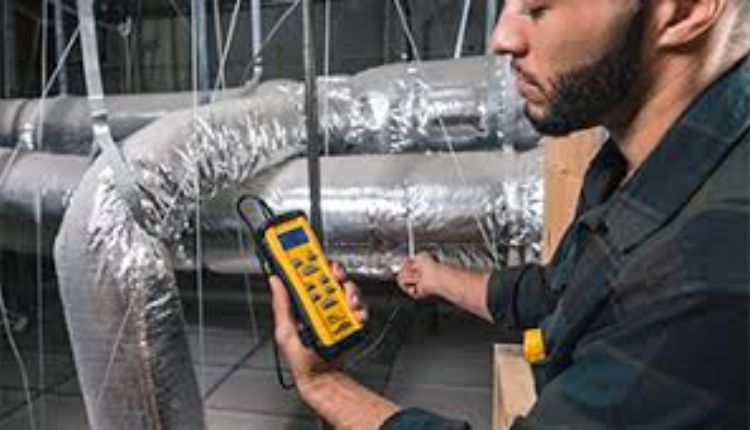
Airflow diagnostics give contractors a clearer view of how air moves through the HVAC system and where that movement breaks down. Instead of assuming that a comfort complaint comes from equipment age or thermostat settings, diagnostics focus on measurable conditions such as static pressure, temperature split, air velocity, duct leakage, return capacity, supply delivery, and room-by-room airflow balance. These readings help connect system behavior to actual operating conditions rather than guesses.
That practical approach matters because heating and cooling performance is shaped by resistance, pressure, and delivery just as much as by mechanical output. A unit may produce heating or cooling, but if the airflow is restricted, much of that capacity never reaches the spaces that need it. In many service situations tied to Heating and Cooling Services in Vancouver, WA airflow diagnostics help explain why a system that appears functional on the surface still struggles with uneven comfort, long runtimes, and avoidable stress. The value of diagnostics is that they turn a vague complaint into something traceable. They show whether air is moving within the required volume and pattern, making it easier to identify the real source of poor performance.
- Why Air Movement Controls System Output
Heating and cooling equipment depend on airflow to transfer energy effectively. In cooling mode, air must move across the evaporator coil at a rate that allows the system to remove heat and moisture in a controlled way. In heating mode, air must pass over the heat exchanger or heating elements with enough volume to carry warmth into the duct system without creating unsafe or inefficient operating conditions. If that air movement is too low or too uneven, performance drops even if the equipment itself is technically operational.
This is where airflow diagnostics become central to system evaluation. They help contractors understand whether the equipment is being allowed to do its job under proper conditions. Weak airflow can reduce delivered capacity, create temperature imbalances, and cause rooms far from the air handler to fall behind. Excessive restriction can also change how long the system runs and how effectively it maintains target conditions. Performance is not just about whether the unit starts. It is about whether the system can transfer comfort throughout the building in a stable, predictable way.
- Comfort Complaints Usually Start With Delivery
Many homeowners and property managers describe HVAC problems in room-based terms. One bedroom is always warm; the upstairs never catches up; the office feels stuffy; or a far corner of the building stays cold in winter. These complaints are often blamed on insulation, thermostat placement, or equipment size, and sometimes those factors are involved. But airflow diagnostics often reveal that the more immediate problem is poor delivery, not insufficient equipment capacity.
A system can only perform as well as its ability to distribute conditioned air. If duct runs are too restrictive, returns are undersized, filters are overly restrictive, or balancing is off, the air may never reach the intended areas properly. Diagnostics help confirm whether the problem is local to one branch, widespread across the system, or tied to pressure conditions affecting the entire duct network. That makes a major difference in repair strategy. Instead of treating every room complaint as an isolated comfort issue, the contractor can evaluate whether the building is suffering from a broader airflow failure that is undermining heating and cooling performance throughout the property.
Strong Performance Depends On Airflow Insight
Heating and cooling performance is often judged by the thermostat reading, but real system performance goes much deeper than that. Comfort, efficiency, humidity control, runtime, noise, and equipment strain are all shaped by how well air moves through the system and across the building. When that movement is compromised, the HVAC system may still operate, but it will not operate well. That is why airflow diagnostics have such an important role in understanding what the system is truly doing.
For homeowners, property managers, and building owners, the takeaway is practical. A system that struggles to deliver consistent comfort does not always need a larger unit or a quick part replacement. It often needs someone to measure how air is being moved, restricted, or lost. Airflow diagnostics provide that insight. They turn heating and cooling performance from an assumption to evidence, making it possible to solve problems with greater accuracy and much less guesswork.