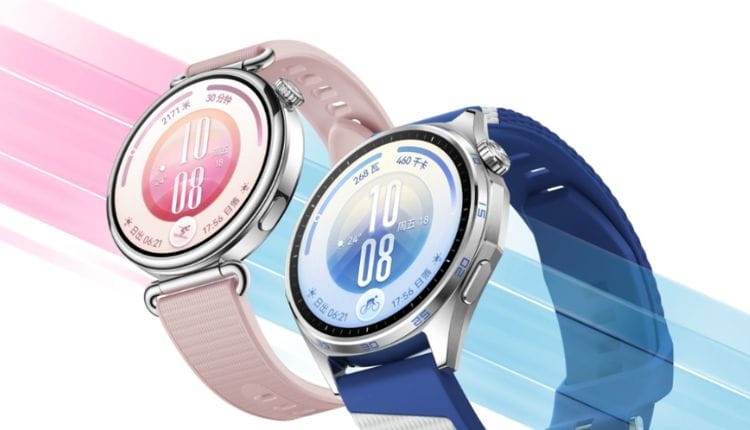
A sports watch is worn more than any other piece of athletic equipment — through workouts, workdays, sleep, and everything between. Yet the industry has long treated straps as an afterthought: fiddly spring bars, tiny tools, scratched lugs, and a changeover process annoying enough that most owners simply never bother. The result is compromise — a sweat-stained sport strap at a dinner table, or a dress strap sacrificed to a workout. The HUAWEI GT 7 Watch attacks this quietly universal problem with the EasyCross quick-release strap system, and the implications reach further than convenience.
This is a look at why a small mechanism matters so much — and at the watch built around it.
The Mechanics of Effortless Change
Traditional strap changes are a minor ordeal: a spring bar tool, a steady hand, good light, and the constant risk of a launched pin vanishing into the carpet. EasyCross replaces the entire ritual with a simple press-and-release mechanism. The strap detaches with a click, the replacement seats with another, and the whole operation takes seconds — no tools, no dexterity test, no wear on the lugs from repeated prying.
The reliability of the lock matters as much as the speed of the release, and here the engineering is reassuring. A strap trusted to stay put through ski falls, sprint finishes, and ocean swims cannot trade security for convenience; the mechanism is designed to release only when deliberately asked.
Cold fingers deserve a mention too. Anyone who has fumbled with watch hardware after a winter run or on a snowy chairlift will appreciate a system designed to be operated by hands that have spent the day in gloves.
One Watch, Every Context
The real product of a quick-release system is not saved seconds but expanded possibility. When changing straps costs nothing, the watch gains a wardrobe: a breathable fluoroelastomer strap for training, leather for the office, metal for the evening, a bright option for the weekend. The watch stops being a single fixed object and becomes a platform that dresses for the occasion.
This fluidity solves a genuine tension in the sports watch category. Devices athletic enough for serious training usually announce themselves as such, permanently. Devices elegant enough for formal settings usually cannot survive a workout. Instant strap changes dissolve the dilemma — the same watch that tracks a muddy trail run at seven can sit under a shirt cuff at nine, looking like it belongs in both places.
Watch faces extend the personalisation into the digital layer, with styles ranging from minimal dress dials to data-dense sport layouts. Strap and face together can transform the watch’s entire character in under a minute.
There is a sustainability angle worth noting as well. A watch whose look can be renewed with a fresh strap is a watch less likely to be replaced for aesthetic boredom — the accessory changes, the instrument endures. In a category where devices are often discarded long before their electronics age out, that kind of design longevity is its own quiet feature.
The Watch Underneath the Straps
Strap versatility would be a gimmick if the core device did not justify round-the-clock wear — and here it emphatically does. More than 110 workout modes anchor the sports offering, led by the all-new skiing and cycling modes. Ski days are captured run by run with descents, vertical, and speed; rides are recorded with the pace, elevation, and heart rate zone data that structured training requires. Golfers, runners, swimmers, and strength athletes all find dedicated depth.
Health monitoring runs continuously: heart rate, blood oxygen, stress, and stage-by-stage sleep analysis, synthesised each morning into the Physical Readiness Score — a single number indicating how prepared the body is for the day’s exertion. It is coaching intelligence that depends entirely on the watch being worn constantly, which is precisely what comfortable straps and instant changes enable.
Up to 21 days of battery life completes the circle. The watch never needs to come off for charging more than a few times a month, so the data stream — and the readiness scores built on it — stays unbroken.
Small Mechanism, Large Philosophy
Design details like EasyCross reveal how a product thinks about its owner. The assumption here is that the watch belongs in every part of life — sport, work, sleep, celebration — and that nothing about the hardware should obstruct that. Straps that change in seconds, a battery that lasts for weeks, styling that reads as classic watchmaking: every element serves the same goal of zero-friction, full-time wear.
That philosophy matters because the watch’s most valuable features — continuous health tracking, readiness scoring, sleep analysis — only deliver their full value when the device is actually worn, all the time, by someone who enjoys wearing it.
For those who have lived with the sport-strap-at-dinner compromise, or abandoned strap changes as too much trouble, the alternative is worth experiencing. Strap options, specifications, and current offers are detailed on the official product page.