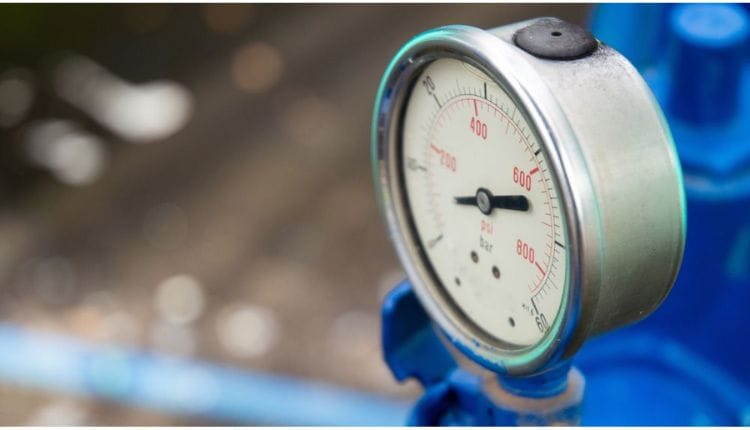
A dashboard gauge exists to translate something invisible, a rotating shaft, a fluctuating voltage, a pressure differential, into a number a person can glance at and trust instantly. That translation depends entirely on a shared assumption between the sensor producing the signal and the gauge reading it: both sides have to agree on what the signal actually means. When that assumption breaks, usually because a component was swapped for one built to a different standard, the gauge does not necessarily go blank. It often does something worse. It keeps moving and simply tells the wrong number with total confidence.
The Quiet Failure Mode of Mismatched Signals
Most people picture equipment failure as something obvious: a gauge that stops moving, a warning light that stays lit, a clear signal that something is broken. Signal mismatches rarely announce themselves that plainly. A tachometer connected to a signal source it was not calibrated for will often still move, still respond to changes in speed, and still look functional at a glance. What it will not do is report the correct number, because the relationship between the incoming signal and the number displayed was calibrated around a specific signal pattern that no longer matches what is actually arriving.
This is a particularly deceptive kind of failure because it does not look like one. A gauge that reads confidently, even incorrectly, invites trust in a way a dead or erratic gauge never would. Someone relying on that number to gauge engine speed, whether for shifting, monitoring load, or simply staying within a safe operating range, has no obvious cue that anything is wrong until the discrepancy becomes large enough to notice against other cues, or until something downstream that depended on accurate speed information behaves unexpectedly.
Why Swapped Components Break This Agreement
Rotational speed sensors do not all produce the same kind of electrical signal, even when they are all measuring fundamentally the same thing. Different manufacturers design their sensors around different pulse counts per revolution, different voltage characteristics, and different waveform shapes. A gauge or a control module built to interpret one manufacturer’s signal pattern is calibrated specifically around that pattern’s characteristics, and it has no inherent way to recognize or adjust for a differently structured signal arriving on the same wire.
This becomes a practical problem specifically in situations where an engine originally built by one manufacturer ends up paired with instrumentation, wiring, or a control system built around a different manufacturer’s engine. The new engine’s speed sensor may function perfectly well on its own terms, producing an accurate, clean signal reflecting its actual rotational speed. The gauge receiving that signal, however, was calibrated to expect a different signal shape entirely, and it will do exactly what it was built to do: interpret the incoming signal according to its own internal assumptions, producing a number that has little relationship to the engine’s actual speed.
What a Signal Conditioner Actually Does
The fix for this kind of mismatch is not to replace the gauge or the sensor, both of which may be functioning correctly within their own specifications. It is to insert a device between them that translates one signal pattern into the other, taking in the sensor’s native output and converting it into a signal shaped the way the receiving gauge or module expects to see it. This is the specific function a signal conditioner performs: not amplifying or cleaning up a weak signal in the way that phrase sometimes implies elsewhere, but restructuring an accurate signal from one format into another so the two mismatched components can effectively communicate.
A Tach Adapter built for this purpose sits directly in that translation role, taking the tachometer signal produced by an engine’s actual speed sensor and reshaping it into a form a mismatched gauge or dashboard can interpret correctly, restoring an accurate speed reading without requiring either original component to be replaced or recalibrated. The device does not change what the engine is actually doing. It changes how that information is communicated to the instrument reading it.
Why This Kind of Fix Is Preferable to Replacement
Replacing a gauge or a control module to match a swapped engine is often more disruptive than it first appears. Instrument clusters are frequently integrated with other vehicle systems, warning lights, secondary displays, diagnostic reporting, in ways that make wholesale replacement complicated and expensive relative to the actual problem being solved, which is a single signal format mismatch on one specific measurement. A conditioning device addresses that narrow problem directly, at the point where the mismatch actually occurs, without disturbing everything else connected to the original instrument cluster that already works correctly.
This is a common pattern in problem-solving generally, not just in vehicle instrumentation. When two otherwise well-functioning systems fail to communicate correctly because of a format or protocol mismatch, the more efficient fix is usually a translation layer inserted at the specific point of disagreement, rather than replacing one of the two systems entirely on the assumption that incompatibility means one side must be deficient.
The Cost of Trusting an Uncorrected Reading
An inaccurate tachometer reading is not merely a cosmetic inconvenience. Engine speed is a reference point other decisions get built around, when to shift, whether a load is being handled within a safe range, whether an unusual sound or vibration corresponds to an unusual speed or falls within normal variation. A reading that is consistently offset in one direction can lead to decisions made against a number that does not reflect reality, decisions that would have been made differently against an accurate figure.
The risk compounds because a confidently wrong gauge gives no internal signal that anything is amiss. Unlike a sensor that fails openly, stuck, erratic, or unresponsive, a signal mismatch produces a gauge that behaves exactly like a functioning one, just calibrated to the wrong relationship between signal and displayed number. Catching that kind of error generally requires cross-referencing against some other, independent indication of actual speed, which is not always readily available in the moment a decision is being made.
Compatibility as an Overlooked Variable in Any Swap
Any time components from different manufacturers or different design generations are combined, there is an implicit assumption that whatever measurement, communication, or control signals pass between them are speaking the same language. That assumption is rarely tested explicitly until something is combined that was not originally designed to work together, at which point differences in signal format, protocol, or calibration reveal themselves, sometimes obviously, sometimes in the quieter, more misleading way a mismatched tachometer does.
This is a useful principle to carry into any situation involving mismatched systems, not just mechanical ones. Two systems can each be functioning entirely correctly according to their own internal logic and still fail to work together meaningfully, because correctness in isolation does not guarantee compatibility in combination. Recognizing that distinction, and addressing it directly at the specific point of disagreement rather than assuming one side must be at fault, is generally the more efficient and less disruptive path to a working, trustworthy result.